He said to them, ?Come away by yourselves to a secluded place and rest a while.? (For there were many people coming and going, and they did not even have time to eat.) They went away in the boat to a secluded place by themselves. Matt 6:31-32
MINISTRY UPDATE
As Christians, leaders, and pastors, we tend not to do a very good job of caring for the needs of our own soul, mind, or body. We often default to putting our own needs last, feeling as though this is somehow righteous, or (more often) as a way of focusing on other?s issues to avoid the pain of dealing with our own needs or unresolved hurts.
Self-care is not a selfish pursuit. Godly self-care is wisdom and the intentional activity of building in resources for the ?long game? of life and ministry. In the event of a flight emergency, putting the oxygen mask over our face first and then helping someone else, isn?t just a safety protocol when flying, but a great metaphor for each of our lives. We are least effective when powered by the fumes of a nearly empty tank.
Healthy self-care functions for the soul as a healthy immune system does for the body, helping to protect us against compromise and moral failures, often quick-fix ?junk food? for a weakened and starving person. Transforming Congregations is not a ministry merely teaching people to ?just say no? to sexual sin and temptation.
Of course, choosing to turn away from sin of all kinds is a part of living as a disciple and following Jesus Christ, but it?s actually far more effective to not only turn away from something, but toward a greater, grander thing; something far more worthy of our time, attention and devotion.
If we?re paying little or no attention to the physical, emotional, mental, or spiritual needs of our own lives, if we aren?t building in good habits and behaviors that strengthen the inner and outer man or woman, how will we have the longevity and stamina to support our loved-ones and others when it?s needed most, or fulfill the purposes of God for our lives in our generation?
I recently participated in a couple of deeply meaningful investments in myself as a Christ-follower, husband, father, friend, and ministry leader. These opportunities convinced me that my own self-care needs to be an essential practice, not an afterthought that rarely leads to meaningful action.
As one who senses a strong call to finish my book for pastors, leaders, and Christ-followers on the topics addressed in the two ministries I lead? Transforming Congregations and Love & Truth Network?I was so blessed to recently participate in a writer?s workshop in Orlando, FL. This inspiring and information-rich training was led by Frank Viola, blogger, speaker, author, and consultant to writers, as well as M. Bridget Cook, a New York Times best-selling author and speaker.
Although my expectations were high, as I?ve participated in other events led by Frank, I walked away with far more than I anticipated to motivate and help me finish my book, and a lot of ideas to consider as I decide on a publishing process. (Incidentally, this excellent writer?s workshop was video recorded and just made available for purchase, if anyone reading this article has aspirations of writing their own book.)
The second experience I recently took advantage of was joining a Mastermind Group. This group was developed for Christ-following entrepreneurs, as well as business and ministry leaders. This was a 12-week virtual group and a time of being poured into as well as pouring into the lives of other group members.
I felt God stretching and broadening my vision as a husband, father, and ministry leader through these 12 weeks alongside brothers on a similar path toward growth. I tend to be highly frugal and nearly turned down this opportunity because it came at a significant cost. However, in retrospect, I see that I?ve missed many opportunities to invest in myself and the work God has called me to because the financial cost felt high. I failed to recognize these opportunities as investments, rather than costs, which had great potential for clarification and multiplication in many areas of my life and ministry.
As I was preparing for this ministry update, I began to wonder how many you who read my communication might have settled for something similar to me in the past, playing life safe and hedging your bets? Have you invested in your personal health, your business, your calling as a spouse, parent, pastor or Christian leader?
Transforming Congregations exists for the benefit of pastors, leaders, staff teams, the broader UMC and the Global Methodist Church. There are many areas each of us as individual leaders and Christ-followers can and should choose to invest in. But have also you considered how Transforming Congregations can help equip you as a pastor, Christian leader and even your church to thrive and offer real hope and transformation on some of the most difficult and painful issues of our time?
Have you made the necessary investment to really become equipped in these areas of need which are only going to become bigger societal and Church related issues as time goes on? We are here to help and strengthen you to be far more effective in the important work of ?setting captives free? in the volatile and widespread areas of sexual sin and identity confusion.
In an especially polarized and divisive culture it can feel really unsafe to speak and live what we know to be true from God?s word. Hiding in the shadows can feel safer, but we are not lamps lit by the power of the Holy Spirit to keep the light of truth and hope veiled within.
We have been purchased by Jesus and saved from our old identities as sinners, of whatever variety. And while many of our particular sin patterns still have a draw on our flesh, the new man or woman has altogether new desires and purposes: eternal purposes.
I love the Henry Blackaby, ?Experiencing God,? concept of finding where God is working and joining Him. Joyously, no one is exempt from God?s invitation to find profound meaning and glorious purpose in walking with Him in His work.
Jesus seemed to have a tender place in His heart for people broken by the deceptive allure and empty promises of sexual sin, eventually leading to the complete loss of their hopes, dreams, and dignity. That?s still true today. Where God is preparing workman today, in our generation in the West, is in equipping us to love in truth, and demonstrate genuine compassion to the masses of men, women and youth whose souls have been disillusioned and fractured by so-called ?sexual freedom?.
We cannot forget the great love chapter of 1 Corinthians 13, penned by the apostle Paul, does not only speak to how love is patient, kind and is not proud or self-seeking, but also how love does not rejoice with unrighteousness, but rejoices with the truth.
We know from 1 Cor 6:18 that sexual sin is accompanied by a kind of devastation to the person, unique in its experience and injury. Therefore, in an era where the right and celebration of sexual expression is regarded by so many as a higher value than religious freedom, rights of conscience, or freedom of speech, we are witnessing a surge in the fallout and consequences of sexual sin; confusion, loneliness, detachment, a lack of meaning or purpose, divorce, abortion, sexually transmitted diseases, sexual abuse, sexual disfunction, and secondary addictions, such as increased drug or alcohol use, to cover up the internal pain and shame.
In my experience, it?s rare that a person makes the connection between their sexual promiscuity and the greater degree of mental, emotional, relational, and even physical deterioration in their lives on their own.
This is where Christ-followers, redeemed from their own sexual sin, willing to be vulnerable and give God glory for His story and redemption in their life, can offer life-giving love, compassion, support, and guidance toward new life in Jesus.
It thrills me to think about the potential life-giving impact a new Global Methodist Church can have on the world regarding restoration from the effects of sexual sin and identity confusion. To see a church, and especially a worldwide denomination, embrace a new and bold standard of compassionate care without compromise in these areas of such need would be a much-needed light on a hill indeed!
HELP SPREAD THE WORD
In addition to online curriculum development, we are offering leadership team development, as well as individual coaching/spiritual mentoring for individuals via Zoom. We?re also offering Webinar equipping opportunities. God has been so good to shine light on ways we can pivot from primarily in-person events and weekend ministry opportunities to virtual trainings and teachings.
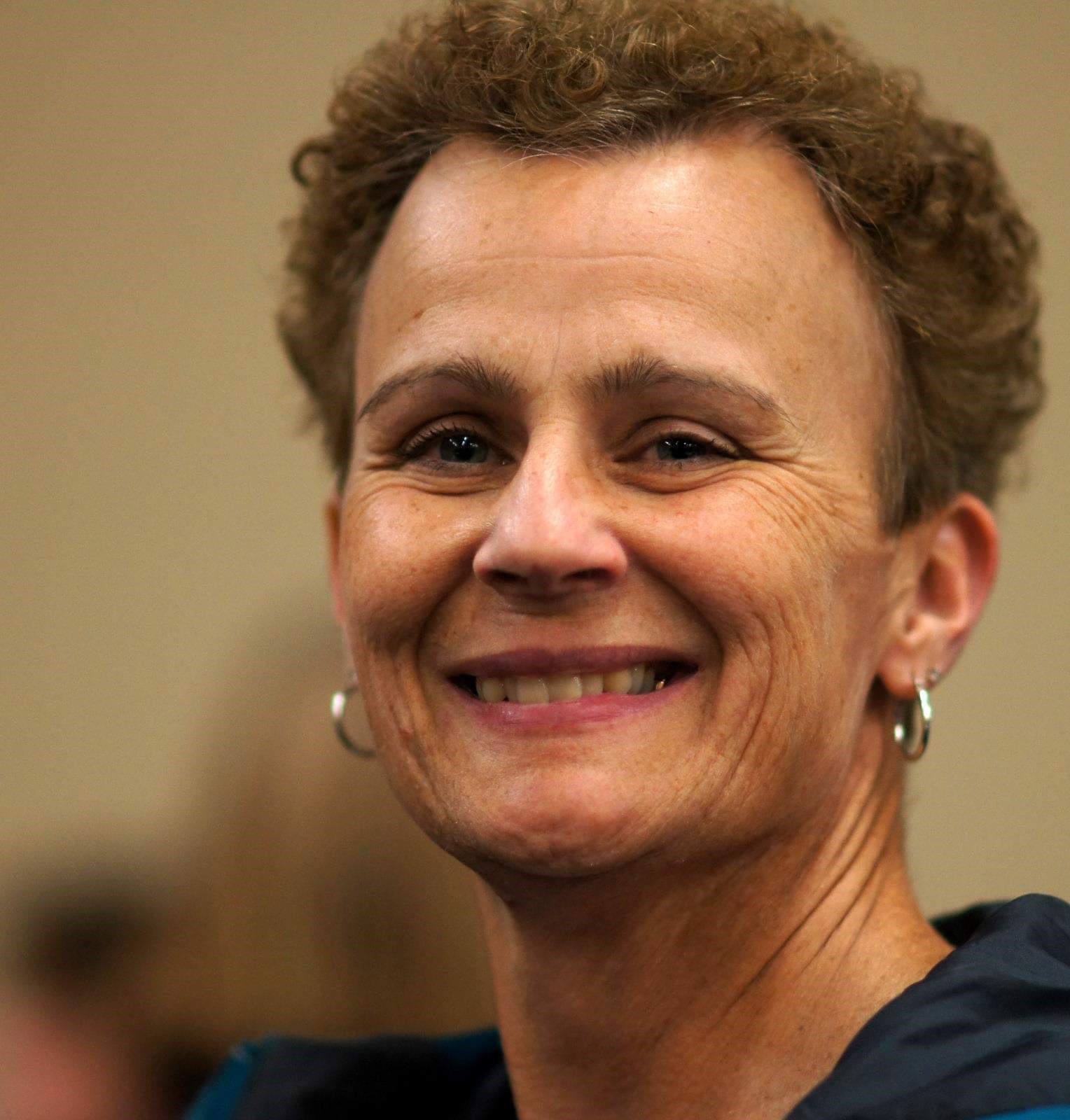
TESTIMONY: KATHY GRACE
What does it mean to own something? Webster says ? belonging or relating to oneself or itself; that which belongs to oneself. To possess; have. For me, to own something means it belongs to me. To have possession of or control over. To want to own something, you find value in it. So, what does it mean to own our gender? Let me see if I can explain.
I had given the ownership of my gender identity over to a belief that being a woman was bad, being a woman meant I would be hated, and vulnerable. These beliefs convinced me there was no value in being a woman. These beliefs also controlled the pursuit of the lie that I needed to be a man to be safe and acceptable. As I began the journey out from living as a man, I spent a lot of time each day in prayer and the word, with the Lord.
At this point, I only knew 3 things - 1. God created me as a woman. 2. I had to go back to what He had created me to be. 3. He was the only one who knew the way out, so I needed Him to show me the way. As I was focused on all the physical  changes that needed to take place, He let me know He didn?t care about those things and that He was after my heart. He wanted to address what was in the way of truly seeing myself. Though I thought it was important to focus on going back to be the woman God created me to be, He thought it was more important I go forward into knowing who I was, how I am valued by Him and how deeply loved I am.
One of the things I did was spend time every day in prayer with Him, and actually, I don?t think I would call it prayer. I would call it conversations. These conversations established a deep trusting friendship with the Lord. And because of the friendship, I knew it was safe to be honest with Him. I could ask Him anything and He would answer. Sometimes it felt like He was already there waiting for me . During these times, I dealt with significant issues and the lies that impacted me and the wounding from them. Also, in this time, I began to see the value of how I was created, and it was on purpose, for a purpose. It wasn?t because I focused on not living as a man but because I was focused on what the Lord said about who I am. I began to believe how I was created was good.
In the process of figuring out what it looks like to own your gender, I think having people to walk with you is important. The Lord had brought two mentors in this process. The first mentor took me thru Psalm 119. There are 22 sections, and each section has about 8 verses in it. I would read the section and have the Lord show me the meaning.
I would then also ask the Lord for a verse from the New Testament that fit that section. This was an amazing assignment. In doing this assignment, it stirred the longing to know the Lord and become all He has created me to be. I didn?t know at the time, but I was no longer being conformed to the world. I was being transformed by the renewing of my mind.
The second mentor helped me process what the Lord was saying, or walking me thru, or talking to me about. Both of them sat with me thru some pretty rough stuff. The Lord used them as examples of healthy women, which unknowingly changed me.
Another avenue for healing is to be involved either in a ministry or small group at church. For me it was both. The first 5 years spent at the Portland Fellowship were vital. Everything I thought was true and stood on was shaken and fell apart. Thankfully not all at once. The things that did fall away made room for the truth and a different place to stand. In both arenas, I found truth, accountability and learned about boundaries. It was a safe place for me to just be. I also received encouragement either in the changes that were seen or encouragement to step out a little more for the changes yet to be seen.
As I embraced being a woman and believing it was good, believing what the Lord said about who I am, being obedient to do the things the Lord said to do, something shifted on the inside which affected the outside. As my transformation  continued and my mind was being renewed, I was becoming uncomfortable with how I was dressing. I didn?t look feminine in the clothes I owned. I didn?t want to wear what I had. I realized the outside was the expression of what was happening on the inside. Not only was I embracing being a woman, but my femininity was beginning to leak out.
I had studied Psalm 139 which told me how I was knit together and how I was known. This time when I read through it, I saw that when the Lord said that He knit me together, I realized He knit me together with everything I would need to be a woman and to be feminine. Even though I lived as a man, there was a nurturing nature in me and as I embraced who I was, that nurturing nature grew. I wanted the softer things. I wanted to wear make-up. I wanted to be beautiful.
To grow in this area, I purposed to make friends with women who were feminine. A dear friend, who is in my opinion is very feminine, knew of my background and took me shopping. It was the scariest, most awkward, and uncomfortable thing ever. With my heart pounding, I managed to seize the moment. She took me way outside the box and after the sweating stopped, I found I liked it. I don?t think femininity can exactly be fully defined, though it is recognizable. I don?t believe real femininity can be forced. As women, that is simply who we are and how we live. I think femininity is the essence of being a woman. An aspect of femininity is knowing we are beautiful and becoming comfortable with our beauty. It is knowing you are created in the image of God and you can carry His beauty. Femininity comes from the inside out and flourishes when given an invitation. Femininity invites others to come and join and be a part. Femininity makes a place for others. True, godly femininity is not afraid to be.